
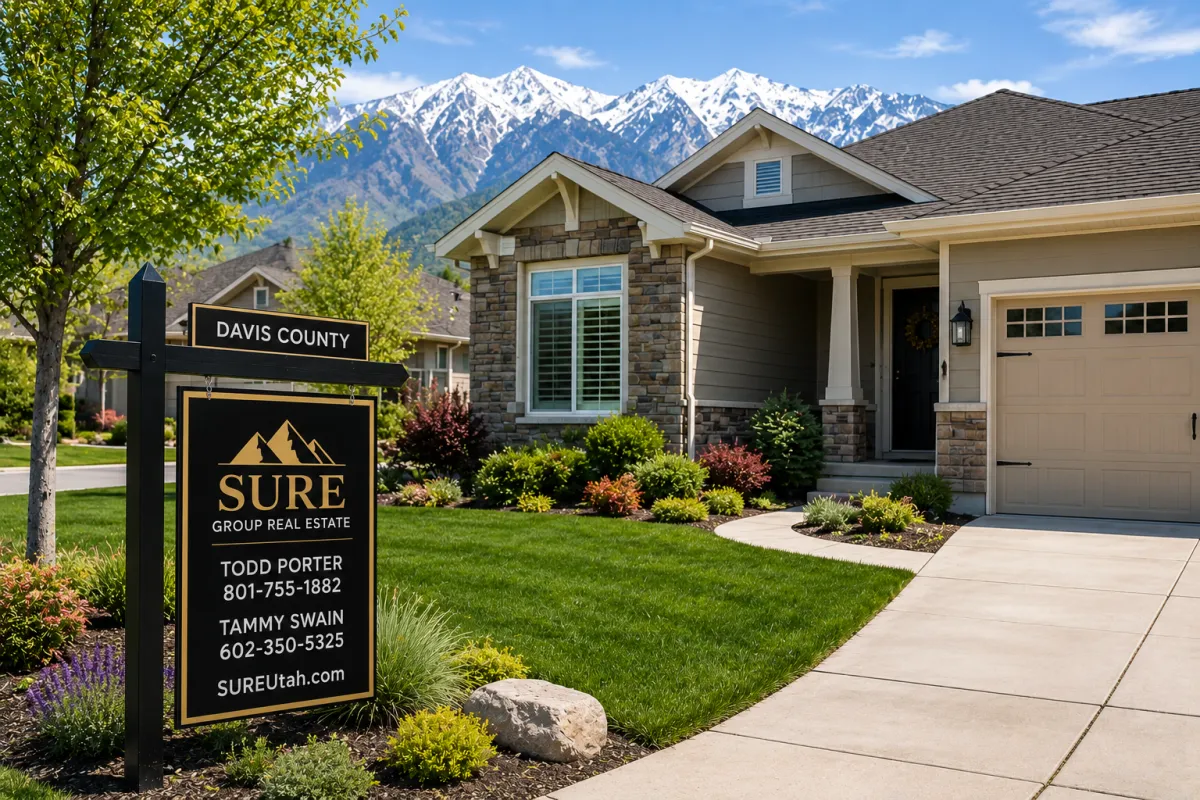
How Much Can I Sell My Davis County Home For?
Your Davis County home is worth what a qualified buyer is willing and financially able to pay in the current market—not what an automated estimate, neighbor, tax assessment, or past appraisal says it should be worth.
A realistic selling-price range should be based on current Wasatch Front MLS evidence, including:
Recently sold comparable homes
Competing active listings
Pending properties
Failed, expired, or withdrawn listings
Your home’s actual finished square footage
Condition, updates, lot, garage, location, and floor plan
Current buyer demand in your price range
Public websites can provide broad context, but serious pricing and offer decisions should start with current Wasatch Front MLS comps.
The goal is not merely to choose the highest possible list price.
The goal is to identify the price and preparation strategy most likely to create strong buyer interest while protecting your equity.
Why Online Home Estimates Can Be Wrong
Automated valuation websites use algorithms, public records, prior sales, and nearby property data. They can be useful as a starting point, but they cannot fully evaluate the house the way an informed buyer will.
An online estimate may not know:
Whether the basement is professionally finished
Whether the roof or HVAC system is nearing replacement
Whether remodeling was completed well
Whether the floor plan feels functional
Whether the view is protected
Whether the backyard is usable
Whether the home smells clean and fresh
Whether the property backs to traffic, commercial activity, or power lines
Whether the garage is unusually deep or too small for modern vehicles
Whether a competing home is substantially better inside
Whether public square-footage records are accurate
Two homes with similar public-record data can sell for very different prices.
One may be move-in ready with excellent presentation. The other may need flooring, paint, roofing, windows, and mechanical work.
A computer may treat them as nearly identical. Buyers will not.
What Comparable Sales Should Be Used?
The strongest comparable sales usually resemble your home in the ways buyers care about most.
That may include:
Same or nearby neighborhood
Similar property type
Similar finished square footage
Similar bedroom and bathroom count
Similar age and construction quality
Similar lot size
Comparable garage capacity
Similar basement finish
Similar condition and updates
Similar location influences
The closest house is not automatically the best comparable.
A remodeled rambler on a quiet interior street may not be comparable to a dated two-story property backing to a busy road, even when they are only a few blocks apart.
Likewise, a home in Bountiful should not automatically be priced from a Farmington, Layton, or Syracuse sale simply because the square footage is similar.
City, neighborhood, commute, school boundaries, housing style, views, lot, and buyer demand can all affect value.
Why Active Listings Matter
Sold properties show what buyers previously paid.
Active listings show what your home will compete against today.
A buyer searching within your price range may compare your property with several alternatives during the same weekend. Those homes influence whether yours feels like:
A strong value
Fairly priced
Slightly ambitious
Clearly overpriced
Active sellers can ask any price they want. That does not mean the market will accept it.
The most useful analysis compares both:
Recent sold homes, which provide evidence of completed transactions
Current competing homes, which show the choices buyers have now
Your home should be positioned to compete—not merely to match the highest asking price in the neighborhood.
Why Failed and Expired Listings Matter
A complete pricing analysis should not ignore homes that failed to sell.
Expired, canceled, withdrawn, or repeatedly reduced listings can reveal:
The price buyers rejected
Features that did not justify the asking price
Poor presentation
Condition problems
Weak photography or marketing
A difficult floor plan
Overconfidence based on an online estimate
A failed listing is not proof that the home was unsellable.
It often shows that the price, condition, marketing, access, or strategy did not align with the market.
That information can protect you from repeating another seller’s mistake.
How Much Do Condition and Updates Affect Value?
Condition affects both the selling price and the number of buyers willing to consider the home.
Updates may improve value when they are:
Professionally completed
Consistent with the home and neighborhood
Broadly appealing
In good condition
Supported by buyer demand
Potentially valuable improvements may include:
Updated kitchen
Updated bathrooms
Newer roof
Newer HVAC system
Quality windows
Fresh neutral paint
Clean flooring
Improved lighting
Functional finished basement
Attractive landscaping
Useful deck or patio
However, sellers rarely recover every dollar spent on remodeling.
A $70,000 kitchen does not automatically add $70,000 to market value.
Buyers compare the completed home with available alternatives. The improvement may help the property sell faster, attract more interest, or compete in a higher condition category—but the market still determines the return.
Should You Remodel Before Selling?
Not automatically.
The best pre-sale work usually focuses first on defects, cleanliness, presentation, and buyer objections.
High-priority items may include:
Repairing water leaks
Correcting safety concerns
Servicing mechanical systems
Fixing damaged walls or doors
Replacing visibly worn flooring
Neutralizing strong paint colors
Improving lighting
Addressing odors
Cleaning deeply
Decluttering
Simplifying landscaping
Improving curb appeal
Large renovations can delay the sale and consume money that may not be recovered.
Before remodeling, compare three scenarios:
Selling in current condition
Completing targeted repairs and presentation improvements
Completing a larger renovation
The right choice depends on your home, price range, competition, available cash, timeline, and likely return.
Does Square Footage Determine the Selling Price?
Square footage matters, but it should never be evaluated alone.
Buyers also care about:
How much space is above grade
Whether the basement feels bright and usable
Ceiling height
Bedroom legality
Bathroom placement
Main-floor living
Storage
Garage capacity
Lot usability
Flow between rooms
Remodeling quality
A smaller home with an excellent layout may outsell a larger home with awkward rooms and wasted space.
Square-footage records can also be wrong.
County, appraisal, MLS, builder, and homeowner measurements may differ. If public records are inaccurate, the discrepancy should be investigated before pricing and marketing the property.
How Do Location and Lot Affect Value?
Even within the same Davis County city, location can materially affect buyer demand.
Positive influences may include:
Quiet interior street
Mountain or Great Salt Lake views
Convenient commuter access
Walkable parks or trails
Proximity to shopping and services
Usable backyard
Privacy
Attractive neighborhood surroundings
Practical driveway and garage access
Potential negative influences may include:
Heavy road traffic
Railroad or aircraft noise
Commercial activity
Steep driveway
Difficult winter access
Poor drainage
Limited parking
Small or unusable yard
Nearby future development
Power lines or utility infrastructure
A seller may become accustomed to a location issue. A new buyer will evaluate it immediately.
Should You Price High and Leave Room to Negotiate?
Usually, that strategy creates unnecessary risk.
An overpriced home may receive:
Fewer showings
Less online engagement
Weak buyer urgency
Longer market time
Price reductions
Low offers
A stale-listing reputation
Greater buyer concern about what is wrong
Buyers do not always make an offer simply because they like the home.
Many skip properties they believe are materially overpriced.
The strongest exposure often occurs when the listing is new. Wasting that period at an unrealistic price can reduce negotiating strength later.
Pricing strategically does not mean giving the home away.
It means using evidence to create buyer interest, competition, and confidence.
How Should Sellers Think About an Appraisal?
An appraisal is an independent opinion of value prepared for a specific purpose and date.
A prior refinance appraisal, tax assessment, insurance estimate, or divorce appraisal may not reflect today’s probable selling price.
Even a current buyer-lender appraisal does not create market demand.
A home still needs to:
Attract showings
Compete with active inventory
Receive an acceptable offer
Survive inspection and due diligence
Meet lender requirements when financing is involved
Appraised value and marketability are related, but they are not identical.
How Can You Estimate Your Net Proceeds?
The selling price is not the amount you take home.
Estimated net proceeds may include deductions for:
Mortgage payoff
Real estate compensation
Title and closing expenses
Seller concessions
Repairs
Home warranty
HOA transfer or document fees
Moving costs
Property-tax adjustments
Other transaction-specific charges
A homeowner considering a smaller replacement property should evaluate both the likely sale price and usable proceeds. Should I Downsize My Home in Davis County? explains why a smaller home does not automatically create the expected financial savings.
Homeowners coordinating two transactions should also review How Do I Sell a Large Home and Buy a Smaller Home in Utah?
What Is the Best Way to Determine Your Davis County Home’s Value?
A reliable home-value consultation should include:
Review of property records
Walk-through of the home
Identification of condition and repair issues
Comparison with recent MLS sales
Review of current competing listings
Review of failed and expired properties
Estimated selling-price range
Recommended preparation strategy
Estimated seller proceeds
Marketing and launch plan
A strong valuation is not a single number designed to impress you.
It is a reasoned price range supported by evidence.
The broader appeal of your community can also influence demand. What Are the Best Places to Live in Davis County, Utah? explains how buyers compare local cities, access, neighborhoods, and lifestyles.
Ready to Find Out What Your Davis County Home Could Sell For?
Todd Porter, known as Utah Todd, and Tammy Swain can evaluate your home against current Wasatch Front MLS sales, active competition, condition, location, buyer demand, and likely seller proceeds.
Get Your Davis County Home-Value Consultation
Frequently Asked Questions
Is my Davis County tax assessment the same as market value?
No. A tax assessment is created for property-tax purposes and may not reflect what buyers would pay in the current market.
Should I use the highest recent sale as my home’s value?
Not automatically. The highest sale may have better condition, location, lot, garage, views, upgrades, or terms than your property.
Will remodeling always increase my selling price?
Remodeling may improve marketability and value, but sellers rarely recover every dollar spent. Compare likely return before beginning major work.
Can an online estimate accurately price my home?
It may offer broad context, but it cannot fully evaluate condition, layout, remodeling quality, location influences, competition, or current buyer response.
Final Thoughts
Your Davis County home’s value should be determined by evidence—not hope, an automated estimate, or a number chosen solely to win the listing.
The strongest pricing strategy considers recent sales, current competition, failed listings, condition, lot, location, square footage, buyer demand, and the home’s complete presentation.
Price is only part of the result.
Preparation, marketing, access, photography, negotiation, and transaction management all affect what you ultimately net.
Todd Porter, known as Utah Todd, and Tammy Swain are real estate agents with SURE Group, brokered by Real Estate Essentials, helping homeowners, sellers, buyers, downsizers, military families, and relocating households throughout Davis County, the Wasatch Front, and Northern Utah.
Todd Porter — Utah Todd
801-755-1882
[email protected]
Tammy Swain
602-350-5325
[email protected]
Real estate is not only an agent’s business, it’s everyone’s business.