
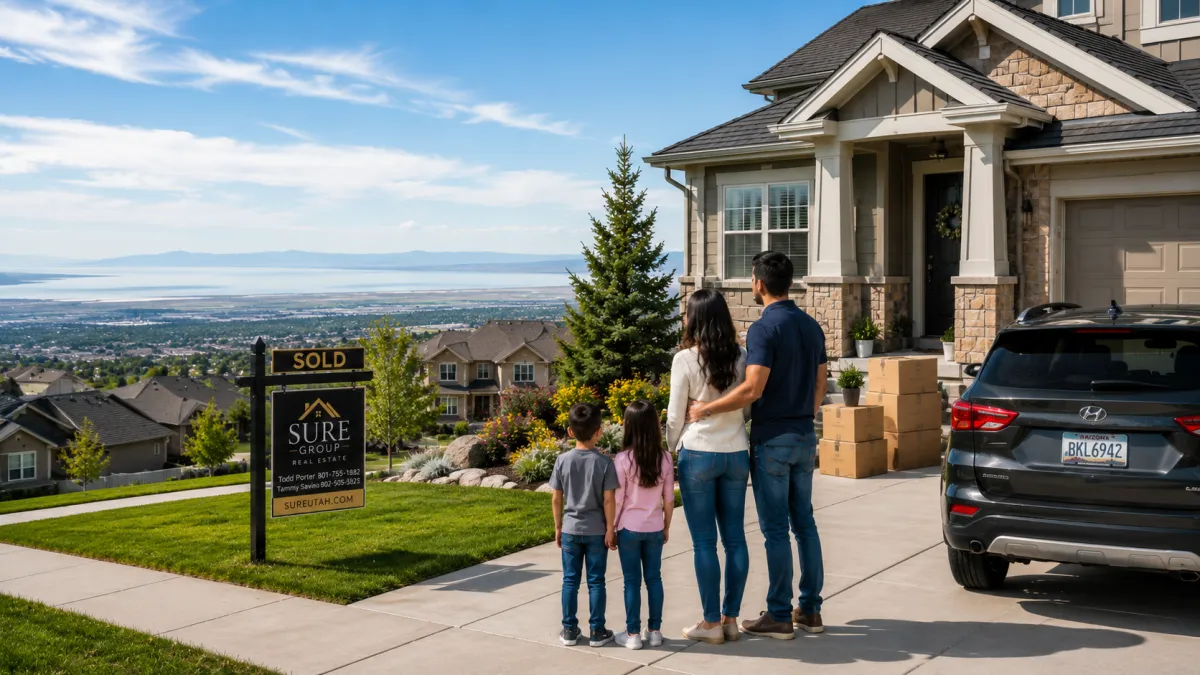
What Should Buyers Know Before Moving From Arizona to Utah?
Moving from Arizona to Utah can offer four distinct seasons, mountain recreation, established suburban communities, and a different range of housing and employment options. But Arizona buyers should not assume Utah is simply a cooler version of home.
Northern Utah has snow, winter inversions, steeper terrain, different commuting patterns, and housing markets that vary sharply between Salt Lake County, Davis County, Utah County, Weber County, and the Wasatch Back.
The strongest relocation decision begins with three questions:
Where will you work?
What winter conditions are you prepared to handle?
Which Utah community fits your daily life rather than your vacation expectations?
Is Utah More Affordable Than Arizona?
Sometimes—but not automatically.
A buyer moving from Scottsdale, parts of Phoenix, or another higher-priced Arizona market may find more options in several Northern Utah communities. Someone moving from a more affordable part of Arizona may be surprised by prices in Park City, Draper, Farmington, Alpine, Heber City, or Salt Lake County’s east-side neighborhoods.
Do not compare only the home price.
Calculate the full cost of ownership:
Mortgage principal and interest
Property taxes
Homeowners insurance
HOA dues
Utilities
Heating
Snow removal
Landscaping and irrigation
Commuting
Immediate repairs
Long-term maintenance
Vehicle costs
Travel back to Arizona
Arizona currently uses a flat individual income-tax rate of 2.5%. Utah tax rules are different, so relocating households should compare their complete state and federal tax situation with a qualified tax professional rather than assuming the move will automatically lower taxes.
Housing affordability should also be measured by what the home allows you to keep after closing. A larger Utah house is not a financial improvement if the payment eliminates savings, travel, retirement contributions, or emergency reserves.
Which Northern Utah Area Is Best for Arizona Buyers?
There is no universal winner. Each region offers a different lifestyle.
Salt Lake County
Salt Lake County may be the strongest choice for buyers who prioritize employment, healthcare, airport access, restaurants, entertainment, and public transportation.
Communities to consider include:
Salt Lake City
Sandy
Draper
South Jordan
Riverton
Herriman
Holladay
Cottonwood Heights
Murray
West Jordan
Salt Lake County offers both urban and suburban housing, but buyers may encounter heavier traffic, denser development, smaller lots in some newer areas, and premium pricing in highly desirable neighborhoods.
Draper may appeal to Arizona buyers who want newer homes, trails, mountain views, and access to both Salt Lake and Utah counties.
Holladay and Cottonwood Heights may appeal to buyers who prefer mature trees, established neighborhoods, and proximity to the Cottonwood Canyons.
Davis County
Davis County may be a strong alternative for Arizona families wanting established suburbs, mountain and lake views, FrontRunner access, parks, and convenient travel toward Salt Lake City or Hill Air Force Base.
Bountiful and North Salt Lake generally provide stronger access toward Salt Lake County.
Farmington and Kaysville offer central locations with established and newer housing.
Layton, Clearfield, Syracuse, Clinton, and nearby communities may work well for buyers connected to Hill Air Force Base, Ogden, or northern Davis County.
Buyers can compare these communities in What Are the Best Places to Live in Davis County, Utah?.
Davis County can provide a middle ground between Salt Lake County’s urban access and Weber County’s additional distance and space.
Utah County
Utah County may fit buyers working in Lehi, Silicon Slopes, American Fork, Provo, Orem, or nearby employment centers.
Possible communities include:
Lehi
American Fork
Highland
Alpine
Saratoga Springs
Eagle Mountain
Pleasant Grove
Orem
Provo
Arizona buyers may appreciate newer construction, mountain views, planned communities, and larger floor plans.
However, Utah County traffic, local road construction, school boundaries, and distance from Salt Lake City should be evaluated carefully.
A large home in Lehi or Saratoga Springs may look attractive online, but the commute can change the quality of daily life.
Weber County
Weber County may provide more housing choices for buyers seeking larger lots, mountain access, or proximity to Ogden.
North Ogden, Pleasant View, South Ogden, Roy, Hooper, and Washington Terrace offer different combinations of established housing, new construction, land, and commuting.
Weber County may work especially well for households connected to Ogden, Hill Air Force Base, Weber County employment, or northern Davis County.
The main tradeoff is a longer commute toward Salt Lake City.
Wasatch Back
Heber City, Midway, Park City, and surrounding Wasatch Back communities may appeal to Arizona buyers seeking mountain living, skiing, trails, reservoirs, and cooler summers.
These areas should not automatically be viewed as affordable.
Park City is a major resort market. Heber Valley includes newer homes, luxury properties, golf communities, second homes, and rapidly growing residential areas.
Winter travel, snow removal, mountain roads, HOA costs, and limited regional routes all deserve careful attention.
How Different Is Utah Weather From Arizona?
This is one of the largest lifestyle adjustments.
Arizona buyers are generally accustomed to hot summers, dry conditions, and limited winter weather in the lower desert. Northern Utah also has dry summers, but winter brings freezing temperatures, snow, ice, and road conditions that can affect commuting.
The Utah Climate Center maintains statewide weather and climate data and serves as an official repository for long-term climate records.
Before buying, evaluate:
Driveway slope
Road elevation
Snow-removal responsibility
Garage space
Heating systems
Insulation
Roof condition
Exterior water lines
Irrigation systems
Winter tires
Commute during storms
A hillside property may provide excellent views but require more difficult winter access.
A home with a three-car garage may be more valuable in Utah than it first appears because of snow, storage, recreational equipment, and vehicle protection.
What Should Arizona Buyers Know About Utah Air Quality?
Northern Utah can experience winter inversions that trap pollution in valleys. Summer wildfire smoke may also affect air quality.
The mountain backdrop can create the impression that the air is always clear, but conditions vary by season, elevation, and weather.
Buyers with asthma or other respiratory concerns should research the specific community and consult appropriate medical professionals before relocating.
Higher-elevation neighborhoods may sometimes sit above inversion conditions, but they can also involve steeper roads, more snow, wind exposure, and longer commutes.
Every location involves tradeoffs.
Will Utah Feel Less Spread Out Than Arizona?
In many Northern Utah areas, cities are positioned along a relatively narrow Wasatch Front corridor.
That can make communities feel more connected than parts of metropolitan Phoenix. However, mountains, freeways, road construction, and north-south traffic can still create significant travel times.
A relocation buyer should test:
The morning commute
The evening commute
School and childcare routes
Grocery access
Medical care
Airport travel
Weekend recreation traffic
Winter alternatives
Do not rely only on mileage.
A 25-mile Utah commute may feel very different depending on whether it uses Interstate 15, U.S. Highway 89, a canyon route, or local roads.
Buyers comparing the Salt Lake area with communities to the north should review Salt Lake City vs. Davis County: Where Should You Live?
Will You Need a Vehicle?
Most Northern Utah households still rely heavily on personal vehicles.
Salt Lake County has the broadest public-transportation network. Davis and Weber counties benefit from FrontRunner commuter rail and connecting bus service.
Park City and Heber Valley have fare-free transit options through local systems, but the Wasatch Back does not offer the same north-south commuter-rail access available along the Wasatch Front.
Before choosing a neighborhood, determine whether nearby transit would actually work with your schedule.
Do not treat the presence of a transit station as useful unless the route, parking, frequency, and final connection fit your routine.
What Must New Utah Residents Do With Their Vehicles?
Utah allows new residents 60 days to transfer vehicle titles and registrations. The Utah DMV advises new residents to bring the existing title or current registration and determine whether emissions or other inspections apply.
Relocating households should also prepare for:
Utah driver-license requirements
Insurance changes
Vehicle registration
Emissions requirements where applicable
Voter registration
School enrollment
Utility setup
Healthcare-provider transfers
Mail forwarding
Arizona and Utah part-year tax filings
Completing these tasks early reduces the risk of missing deadlines during the move.
Should You Buy Before Moving or Rent First?
Buying before arrival may work when:
Your employment location is certain.
You understand the commute.
You have spent meaningful time in Northern Utah.
Your preferred county is clear.
You have strong local representation.
Your financing and Arizona home sale are coordinated.
Renting first may be smarter when:
You are uncertain about the county.
Employment may change.
You have not experienced a Utah winter.
School or medical needs are unresolved.
You are deciding between the Wasatch Front and Wasatch Back.
You need time to sell an Arizona property.
Renting creates another move, but buying the wrong home or location can be far more expensive.
How Should Arizona Buyers Shop Remotely?
Begin with a disciplined relocation plan.
Identify:
Comfortable monthly payment
Expected sale proceeds
Employment location
Maximum commute
Required bedrooms and bathrooms
Garage and storage needs
Preferred property age
Winter-driving tolerance
School or community requirements
Desired access to outdoor recreation
Then compare current Wasatch Front MLS listings rather than depending only on national portals or automated estimates.
A virtual home tour should show:
The full street
Neighboring properties
Backyard exposure
Road slope
Drainage
Traffic and noise
Nearby construction
The route to daily services
Arizona buyers should also review What Should Buyers Know Before Moving From California to Utah? because many of the relocation, climate, commuting, and remote-purchase principles apply to any out-of-state move.
Ready to Relocate From Arizona to Utah?
Todd Porter, known as Utah Todd, and Tammy Swain can help you compare Northern Utah communities, current Wasatch Front MLS homes, commuting, climate, property condition, and complete ownership costs.
Frequently Asked Questions
Is Utah colder than Arizona?
Northern Utah has substantially colder winters than Arizona’s lower desert areas, including freezing temperatures, snow, and icy roads. Summers remain hot and dry, but nights may be cooler depending on elevation.
Is Davis County good for Arizona families?
Davis County can be a strong fit for buyers wanting established suburbs, FrontRunner, parks, mountain access, Hill Air Force Base proximity, and convenient access toward Salt Lake City.
Is Utah less expensive than Arizona?
It depends on the Arizona market and Utah community being compared. Utah may provide more home or yard in some areas, while Park City, Draper, Alpine, Farmington, and other premium markets can be expensive.
Can Arizona buyers purchase a Utah home remotely?
Yes. Virtual tours, electronic documents, local inspections, and remote lender coordination can support an out-of-state purchase. Visiting the neighborhood before closing remains highly recommended.
Final Thoughts
Moving from Arizona to Utah can provide mountain access, four-season living, established suburbs, and a different range of housing choices.
The biggest adjustment may not be the home. It may be winter weather, commuting, air quality, snow management, and the differences between Northern Utah’s counties.
Compare the daily reality—not just the scenery.
The right Utah community should fit your work, budget, transportation, climate tolerance, and long-term lifestyle.
Todd Porter, known as Utah Todd, and Tammy Swain are real estate agents with SURE Group, brokered by Real Estate Essentials, helping relocating families, buyers, sellers, military families, move-up homeowners, and luxury clients throughout Davis County, the Wasatch Front, and Northern Utah.
Todd Porter — Utah Todd
801-755-1882
[email protected]
Tammy Swain
602-350-5325
[email protected]
Real estate is not only an agent’s business, it’s everyone’s business.