
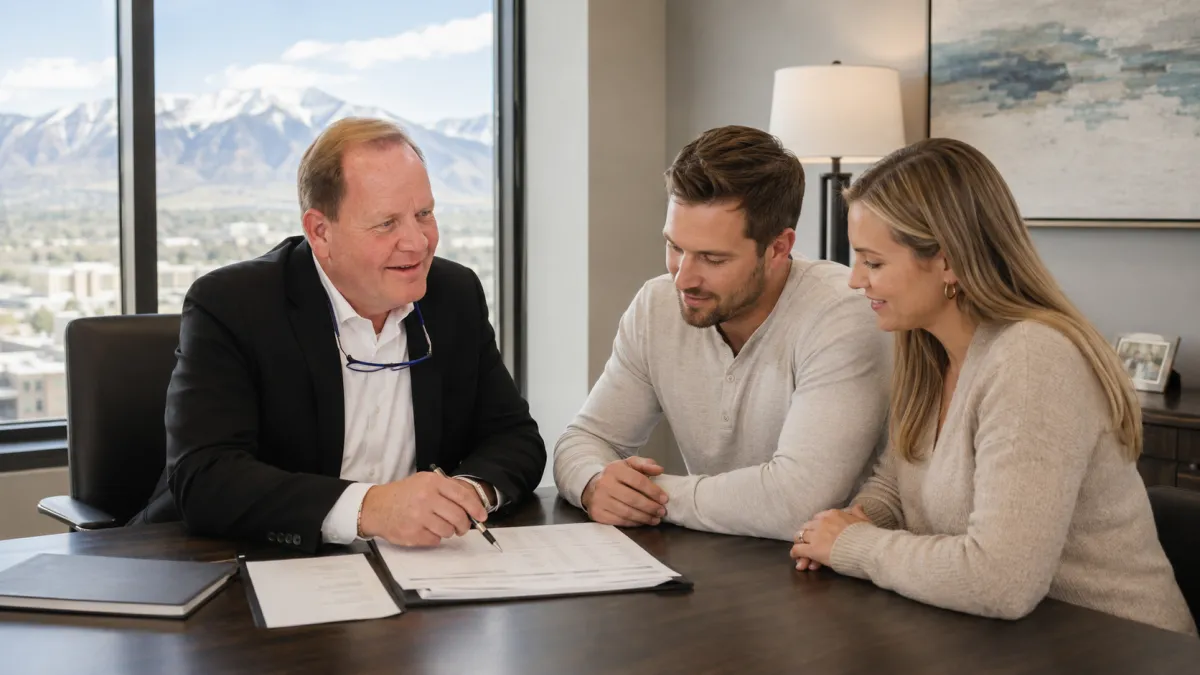
What Are Closing Costs for Buyers in Utah?
Closing costs are the expenses required to complete a home purchase in addition to the down payment.
For many Utah buyers, a reasonable early planning estimate is approximately 3% to 4% of the purchase price, although the actual amount can be lower or higher depending on the loan, lender, property, prepaid expenses, insurance, taxes, title charges, and negotiated seller concessions. HUD’s homebuyer counseling materials use a similar 3%–4% general planning range while emphasizing that costs vary by location and loan type.
For example, a buyer purchasing a $500,000 home might initially plan for roughly $15,000 to $20,000 in closing-related expenses. That is not a quote. The buyer’s Loan Estimate and final Closing Disclosure provide the transaction-specific numbers.
Your down payment and closing costs are also not the same thing. Buyers need to understand both before writing an offer.
Todd Porter, known as Utah Todd, and Tammy Swain are real estate agents with SURE Group, brokered by Real Estate Essentials, helping buyers, sellers, military families, relocating families, first-time buyers, and move-up homeowners throughout Davis County, the Wasatch Front, and Northern Utah.
What Do Buyer Closing Costs Include?
Buyer closing costs can include several categories of expenses.
Lender Charges
Depending on the mortgage, lender charges may include:
Loan-origination charges
Underwriting or processing fees
Discount points
Credit-report charges
Rate-lock or related loan charges
Discount points are optional in many situations and may be used to obtain a lower interest rate. Buyers should compare the upfront cost with the expected monthly savings and how long they expect to own the home.
Appraisal and Inspection Costs
The lender may require an appraisal to evaluate the property for financing purposes.
A home inspection is different. It helps the buyer understand the condition of the home, but it does not guarantee that every problem will be found.
Additional inspections may be appropriate depending on the property, including:
Sewer scope
Radon testing
Roof inspection
Structural evaluation
Mold or moisture evaluation
HVAC inspection
Some inspection expenses are paid before closing and may not appear as part of the final amount due at settlement.
Title and Settlement Charges
Title and settlement expenses may include:
Title search or examination
Lender’s title-insurance policy
Optional owner’s title-insurance coverage
Escrow or settlement services
Recording charges
Document preparation or related services
These charges help complete the transfer of ownership and protect against certain title-related risks.
Prepaid Expenses and Escrow Funding
Some of the money needed at closing is not technically a lender fee. It may be money collected in advance for future expenses.
This can include:
Homeowners insurance premium
Property-tax reserves
Initial escrow-account funding
Prepaid mortgage interest
HOA-related charges when applicable
The exact prepaid amount may change based on the closing date. Closing near the beginning or end of a month can affect the amount of prepaid interest collected.
How Do Buyers Know the Estimated Amount?
After applying for a mortgage and providing the required information, buyers receive a Loan Estimate.
The Consumer Financial Protection Bureau explains that the Loan Estimate includes the estimated interest rate, monthly payment, total closing costs, estimated taxes and insurance, and information about how the payment may change.
The Loan Estimate is one of the most important documents a buyer receives.
Review:
Loan amount
Interest rate
Whether the rate is locked
Monthly principal and interest
Estimated taxes and insurance
Mortgage insurance
Total closing costs
Estimated cash to close
Lender credits
Discount points
Whether any penalty or unusual term applies
Do not look only at the interest rate. A loan offering a slightly lower rate may have substantially higher upfront charges.
Before selecting the maximum price you qualify for, review What Are the Biggest Mistakes Utah Homebuyers Make?
What Is the Closing Disclosure?
The Closing Disclosure shows the final details of the mortgage.
The CFPB describes it as a five-page form containing the loan terms, projected monthly payment, and the fees and other costs required to obtain the mortgage.
In most covered mortgage transactions, the lender must provide the Closing Disclosure at least three business days before closing. That gives the buyer time to review the final numbers, identify errors, and ask questions.
Compare the Closing Disclosure with the most recent Loan Estimate.
Pay close attention to:
Interest rate
Loan amount
Monthly payment
Closing costs
Lender credits
Seller credits
Taxes and insurance
Cash to close
Earnest-money credit
Down-payment amount
The CFPB recommends asking the lender to explain significant differences between the Loan Estimate and Closing Disclosure.
What Is Cash to Close?
Closing costs and cash to close are related, but they are not identical.
Closing costs are the transaction and loan expenses.
Cash to close is the total amount the buyer needs to bring after accounting for items such as:
Down payment
Closing costs
Prepaid expenses
Earnest-money deposit
Seller credits
Lender credits
Other adjustments
A buyer may have $14,000 in closing costs but need substantially more cash because the down payment is also due.
The final amount should come from the lender and settlement company—not an online calculator.
For a broader affordability review, read How Do I Know What I Can Really Afford in Utah?
Can the Seller Pay Buyer Closing Costs?
Sometimes.
A buyer may negotiate for the seller to contribute toward allowable closing costs, prepaid expenses, or an approved interest-rate buydown.
Whether that is realistic depends on:
Current Wasatch Front MLS competition
Number of competing offers
Days on market
Property condition
Seller motivation
Purchase price
Appraised value
Loan-program limits
Seller’s expected net proceeds
Seller concessions are not free money. They are part of the overall offer.
For example, an offer with a higher price and a closing-cost credit may produce a similar seller net to a lower offer without concessions. However, the home must still support the contract price through the appraisal when financing is involved.
FHA rules generally allow interested-party contributions of up to 6% toward permitted origination fees, closing costs, prepaid items, and discount points, although the exact transaction must meet current program requirements.
Conventional and VA financing have different rules and limits. Buyers should confirm the allowable amount with their lender before writing the offer.
For negotiation guidance, read How Do I Write a Strong Offer Without Overpaying?
Can Closing Costs Be Rolled Into the Loan?
Usually, buyers cannot simply add every closing cost to the loan balance on a standard purchase.
However, some costs may be offset through:
Seller concessions
Lender credits
Down-payment assistance
Negotiated rate structures
Certain loan-program provisions
A lender credit may reduce upfront cash but often comes with a higher interest rate. Buyers should compare the immediate savings with the longer-term cost.
The best structure depends on how long the buyer expects to own the home, available cash, monthly-payment comfort, and current financing terms.
How Much Money Should Buyers Keep After Closing?
Do not use every available dollar merely to complete the purchase.
After closing, buyers may need money for:
Moving
Appliances
Utility deposits
Furniture
Window coverings
Immediate repairs
Insurance deductibles
Emergency savings
A home purchase is stronger when the buyer still has financial reserves after receiving the keys.
For more guidance on planning around payment, condition, commute, and cash needs, read What Should I Know Before Buying a Home in Davis County?
The Bottom Line
Utah buyers should plan for closing costs in addition to the down payment.
A preliminary estimate of around 3% to 4% of the purchase price can be useful for early planning, but the actual amount depends on the loan, lender, property, closing date, title charges, insurance, taxes, prepaid expenses, and negotiated credits.
The most reliable process is:
Obtain a detailed Loan Estimate
Compare more than one loan when appropriate
Review estimated cash to close
Confirm any seller concessions with the lender
Compare the Closing Disclosure with the Loan Estimate
Ask questions before signing
Watch: How Much Does It Really Cost to Buy in Davis County?
[Embed Day 35 YouTube video here after upload]
Ready to Understand Your Utah Buying Costs?
Todd Porter, known as Utah Todd, and Tammy Swain can help you compare current Wasatch Front MLS homes, estimated closing costs, seller concessions, monthly payment, home condition, and the smartest path forward.
FAQ: Buyer Closing Costs in Utah
Are buyer closing costs separate from the down payment?
Yes. The down payment reduces the amount financed, while closing costs cover loan, title, settlement, appraisal, prepaid, insurance, tax, and related transaction expenses.
When will I know my exact closing costs?
The Loan Estimate provides estimated costs early in the mortgage process. The Closing Disclosure provides the final loan and closing figures and is generally received at least three business days before closing.
Can closing costs change before settlement?
Some costs can change under permitted circumstances, while others are subject to legal tolerance limits. Ask the lender for a specific explanation when a fee changes.
Can seller concessions cover my entire down payment?
Generally, no. Seller concessions are typically used for allowable closing costs, prepaid expenses, or approved financing costs—not the buyer’s required minimum investment. Rules vary by loan program.
Final Thoughts
Closing costs should be part of the buying strategy from the beginning—not a surprise discovered days before settlement.
Todd Porter, known as Utah Todd, and Tammy Swain with SURE Group, brokered by Real Estate Essentials, help buyers understand MLS-supported value, financing considerations, seller concessions, property condition, and total cash requirements throughout Davis County and Northern Utah.
Todd Porter / Utah Todd
SURE Group
Brokered by Real Estate Essentials
801-755-1882
[email protected]
Tammy Swain
SURE Group
Brokered by Real Estate Essentials
602-350-5325
[email protected]
Website: SUREUtah.com
Real estate is not only an agent’s business, it’s everyone’s business.