
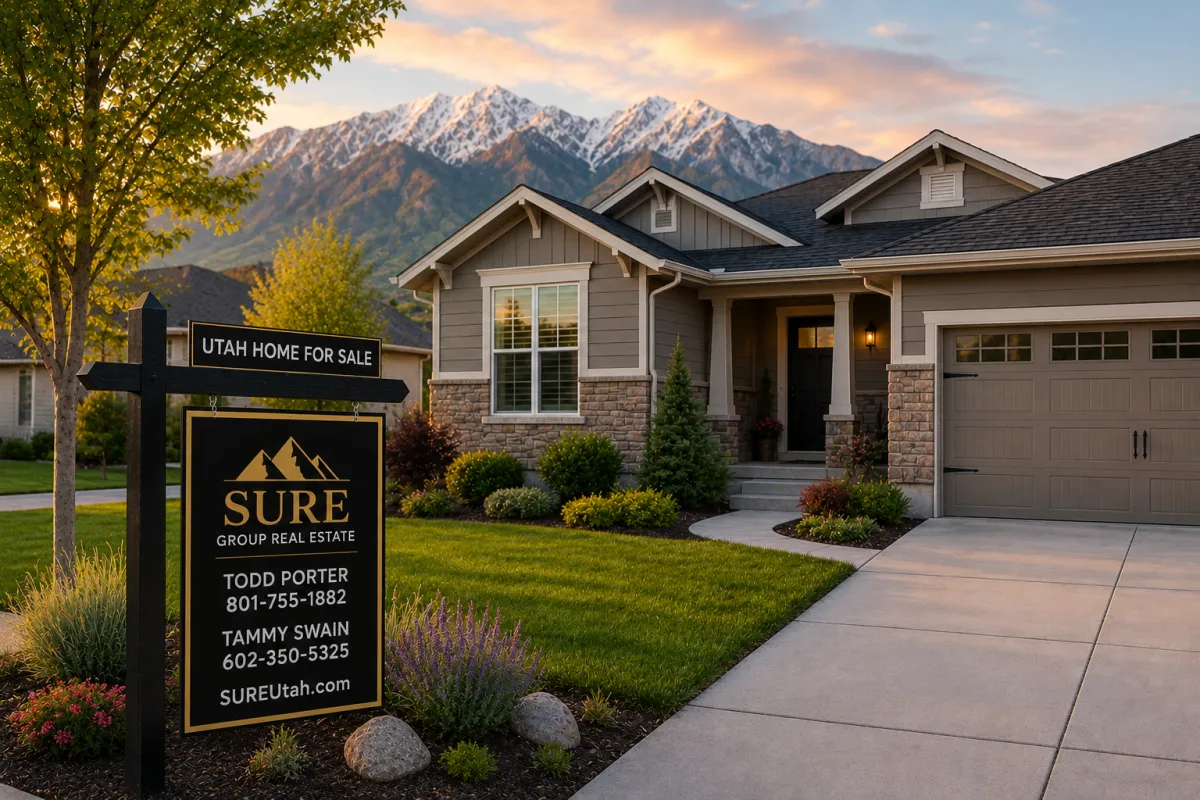
How Do I Know If My Utah Home Is Overpriced?
Your Utah home may be overpriced when it receives online views but few showings, showings but no offers, repeated feedback about price, stronger nearby competition, or no meaningful activity during the period when new listings usually receive their greatest attention.
The clearest sign is not simply the number of days on market.
It is the relationship between:
Price
Condition
Competition
Buyer response
Current financing conditions
The home’s location and features
An overpriced home is not necessarily a bad home.
It is a home positioned above what qualified buyers currently believe it is worth compared with their other choices.
Public sites can be useful for broad context, but serious pricing and offer decisions should start with current Wasatch Front MLS comps.
What Does “Overpriced” Really Mean?
Overpriced does not mean the seller is unreasonable or that the property has no value.
It means the asking price is not supported strongly enough by current market evidence and buyer behavior.
A home may be overpriced because:
Comparable sales do not support the number
Competing listings offer more value
The home’s condition does not match its price
The seller priced from an online estimate
The seller included every renovation dollar in the price
The home was compared with a superior neighborhood or property type
Interest rates changed buyer affordability
The listing missed its strongest launch window
The market does not evaluate what the seller paid, owes, invested, or needs for the next purchase.
Buyers compare the property with the homes available to them now.
What Are the First Signs a Home Is Overpriced?
One weak weekend does not prove a pricing problem.
However, several patterns deserve attention.
Strong online traffic but few showings
This often means the listing attracts initial interest but buyers reject the value after reviewing the photos, price, location, size, or features.
The marketing may be working.
The positioning may not be.
Showings but no offers
This suggests buyers are willing to consider the home but do not believe the complete package justifies the asking price.
Condition may also be part of the problem.
Repeated price-related feedback
One buyer’s opinion may not matter.
Several independent buyers or agents making similar comments should not be ignored.
Nearby homes receive offers first
A competing home that sells while yours remains active provides useful market evidence.
Compare price, condition, lot, updates, garage, location, and incentives.
No second showings
A first showing means the home made the buyer’s initial list.
A second showing often means serious consideration.
If buyers consistently visit once and move on, the home may not provide enough value relative to the alternatives.
How Long Should Sellers Wait Before Adjusting the Price?
There is no universal number of days.
The correct timing depends on:
Local inventory
Property type
Price range
City and neighborhood
Season
Showing volume
Competition
Whether the home is vacant or occupied
Current financing conditions
A luxury or highly unusual property may require more time than a typical Davis County home.
However, sellers should evaluate activity quickly.
The first days and weeks usually produce the most attention from buyers already waiting for a matching property.
If the home receives weak activity from the beginning, waiting longer does not always solve the problem.
Review:
Online engagement
Showing requests
Showing feedback
Second showings
Open-house attendance
Competing listings
New pending sales
Price reductions nearby
The question is not, “Have we waited long enough?”
It is, “What is the market telling us?”
Can a Home Be Priced Correctly and Still Not Sell?
Yes.
Price is important, but it is not the only factor.
A correctly priced home may still struggle because of:
Poor photography
Weak listing description
Limited showing access
Odors
Clutter
Deferred maintenance
Dark rooms
Pet issues
Difficult tenant occupancy
Poor curb appeal
Unresolved title or HOA concerns
Ineffective marketing
A severe location disadvantage
Before reducing the price, determine whether the problem is:
Price
Condition
Presentation
Marketing
Access
A combination of several factors
Reducing the price without correcting poor presentation can waste the adjustment.
What Comparable Sales Should Be Used?
The best comparable properties should resemble the home in the ways buyers care about most.
That may include:
Same neighborhood or nearby location
Similar property type
Similar finished square footage
Similar age
Similar basement finish
Similar lot size
Similar garage capacity
Similar condition
Similar view or road influence
The closest sale is not always the best comparable.
A fully updated rambler on a quiet street may not support the same value for a dated two-story home backing to a major road.
A complete analysis should review:
Recent closed sales
Pending homes
Current active listings
Expired and withdrawn listings
Repeatedly reduced listings
The earlier guide How Much Can I Sell My Davis County Home For? explains how these factors work together to establish a realistic value range.
Can an Online Estimate Tell Me If My Home Is Overpriced?
Not reliably.
Automated estimates may not fully understand:
Interior condition
Remodeling quality
Functional layout
Basement usability
Actual finished square footage
View quality
Traffic or noise
Lot usability
Deferred repairs
Current competition
An online estimate may be above or below the realistic selling range.
It should not replace an in-person property review and current MLS analysis.
Do Expensive Improvements Justify a Higher Price?
Sometimes—but not dollar for dollar.
A seller may have spent heavily on:
Kitchen renovation
Bathroom remodeling
Flooring
Windows
Landscaping
Solar
Basement finishing
Outdoor living
Custom features
Those improvements may increase buyer interest and marketability.
But buyers compare the finished home with available alternatives.
They do not reimburse the seller automatically for every dollar spent.
Highly personalized improvements may also have less broad appeal.
Value depends on:
Quality
Condition
Design
Neighborhood standards
Buyer demand
Comparable sales
Is the Home Overpriced—or Is the Market Slow?
Sometimes the entire market segment is moving slowly.
That still affects pricing.
A price that might have worked during a highly competitive seller’s market may not work when buyers have more inventory and higher financing costs.
Look at homes within the same:
City
Neighborhood
Property type
Price range
Condition category
If similar homes are also sitting, the market may be slower.
If the competing homes are receiving offers while yours is not, the problem is more likely property-specific.
The article What Is the Best Way to Sell a Home in Utah Right Now? explains why today’s sellers need to align preparation, pricing, marketing, and buyer affordability.
Should You Reduce the Price in Small Increments?
Frequent small reductions can weaken the listing.
A minor change may not move the home into a new buyer search range or change its value position meaningfully.
It can also make the seller appear reactive rather than strategic.
A price adjustment should be based on:
Updated comparable sales
New competition
Buyer feedback
Showing activity
Search-price thresholds
The seller’s timeline
Current market conditions
The goal is not to reduce the price repeatedly.
The goal is to reposition the home where qualified buyers recognize the value.
How Much Should You Reduce the Price?
There is no standard percentage.
The right adjustment depends on how far the current price is from the supported range.
Ask:
Which buyers are missing the listing because of their search limit?
What competing homes are winning?
What price range is supported by recent sales?
Has the home’s condition been accounted for honestly?
Would a targeted concession solve the problem better?
Does the presentation need to improve at the same time?
A meaningful price change combined with improved photography, presentation, access, or concessions may create renewed interest.
A token reduction often does not.
Could Buyer Concessions Work Better Than a Price Reduction?
Possibly.
Payment-sensitive buyers may respond to:
Closing-cost assistance
Mortgage-rate buydown
Repair credit
Home warranty
Flexible possession
Included appliances
A financing concession may improve monthly affordability more than the same amount applied as a price reduction.
However, concessions affect seller net proceeds and may be limited by lending rules.
The strategy should be reviewed with the buyer’s lender and reflected in a seller net sheet.
What Happens When a Home Sits Too Long?
Long market time can change buyer perception.
Buyers may begin asking:
What is wrong with the home?
Why has nobody purchased it?
Is the seller desperate?
Will the seller accept a low offer?
Is there a hidden inspection problem?
A stale listing may attract more aggressive negotiation, even after the price becomes reasonable.
That is why the initial strategy matters so much.
Sellers who want to create urgency while protecting equity should also review How Do I Sell My Davis County Home Fast Without Leaving Money on the Table?
What Should You Do If Your Utah Home Is Overpriced?
Take a disciplined approach.
Reassess the evidence
Review new closed, pending, active, expired, and withdrawn listings.
Review buyer behavior
Look at showings, feedback, second visits, online engagement, and open-house activity.
Improve presentation
Correct photography, curb appeal, odors, lighting, clutter, access, or maintenance concerns.
Reevaluate incentives
Determine whether buyer concessions could improve affordability.
Make one meaningful adjustment
Reposition the home based on evidence rather than making repeated emotional changes.
Relaunch the marketing
Update the description, photography where needed, digital marketing, email outreach, and agent promotion.
The seller should understand exactly why the strategy is changing.
How Do You Avoid Overpricing From the Beginning?
Before listing:
Review current Wasatch Front MLS comps
Walk through the property honestly
Compare current competition
Study failed listings
Complete important preparation
Calculate likely seller proceeds
Select a supported price range
Prepare the full marketing launch
Establish an activity-review schedule
Agree in advance on how to respond if the market is weak
The strongest pricing conversation is not about choosing the highest number.
It is about protecting the seller’s final result.
Ready for an Honest Utah Home-Pricing Review?
Todd Porter, known as Utah Todd, and Tammy Swain can evaluate your Utah home against current Wasatch Front MLS sales, active competition, failed listings, property condition, buyer activity, and likely seller proceeds.
Frequently Asked Questions
How do I know if my home is priced too high?
Common signs include weak showing activity, repeated price feedback, no second showings, competing homes selling first, and no offers after meaningful exposure.
Should I reduce my price if I have not received an offer?
Possibly, but first evaluate condition, marketing, showing access, buyer feedback, and current competition.
Does a long time on market always mean the home is overpriced?
Not always. Unusual, luxury, rural, or highly specialized properties may require more time. For typical homes, extended market time often indicates a value, presentation, or access problem.
Can better marketing fix an overpriced listing?
Better marketing can improve exposure, but it cannot permanently overcome a price that buyers believe is unsupported.
Final Thoughts
The market usually communicates clearly.
Few showings, no second visits, repeated price objections, stronger competing sales, and extended inactivity all provide evidence.
Do not take that feedback personally.
A strategic adjustment is not an admission that the home lacks value. It is a decision to align the listing with what qualified buyers will act on today.
The sooner the seller responds to credible evidence, the better the chance of protecting time, negotiating strength, and equity.
Todd Porter, known as Utah Todd, and Tammy Swain are real estate agents with SURE Group, brokered by Real Estate Essentials, helping sellers, homeowners, downsizers, buyers, and relocating families throughout Davis County, the Wasatch Front, and Northern Utah.
Todd Porter — Utah Todd
801-755-1882
[email protected]
Tammy Swain
602-350-5325
[email protected]
Real estate is not only an agent’s business, it’s everyone’s business.